What’s Growing Inside Your HVAC System? A Florida Homeowner’s Guide to Mold and Moisture
Key takeaways
Mold in HVAC systems is common, especially in hot and humid climates like Florida. Mold can grow when moisture and dust accumulate in your system, especially if it isn’t cleaned and filters aren’t changed regularly. Regular maintenance is the best way to reduce mold growth.
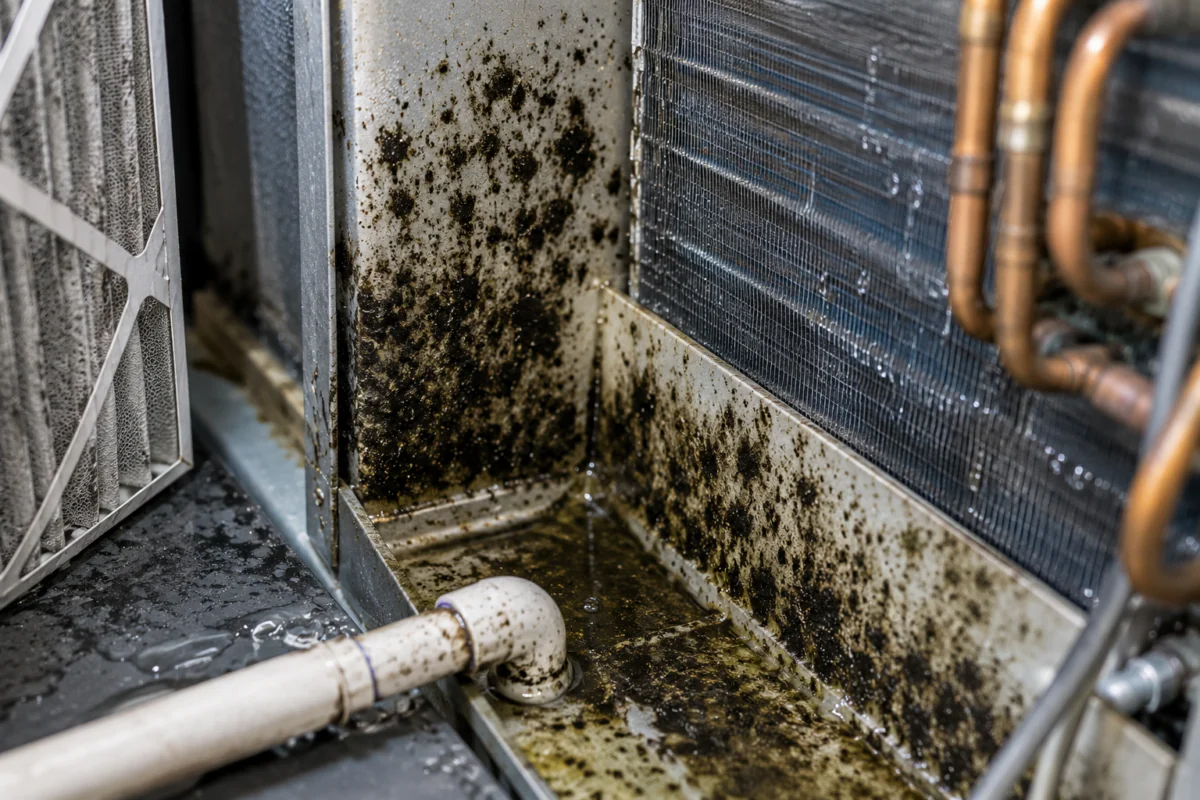
Florida is known for its heat and humidity. Air conditioning is particularly important in the muggy summers, but it can also become a home for mold and mildew. Mold can cause health problems for people and pets, especially if you have asthma or another respiratory condition, as well as damage your system. Detecting and removing mold is thus critical.
Why Does Mold Grow in HVAC Systems?
Mold spores are naturally present in the environment, but your HVAC system can provide the conditions they need to grow. Mold feeds on wood, cardboard, dust, and fabric. But your AC system can turn into the perfect breeding ground. Mold loves moist, warm, dark spaces. It feeds off of dust and water. The dust comes from the inside of your home, and is theoretically caught by your air filter, but some of it can get through, especially if your filter needs cleaning or changing.
When air filled with dust and water moves over your evaporator coils, the air is cooled, and moisture condenses on the coil along with mold spores. When your AC stands unused for a while in the winter, more dust is likely to collect, resulting in even more mold.
How to Prevent Mold Growth
Two things are key to preventing mold growth in your AC system:
- hanging your filters. Always change filters when the manufacturer recommends and consider changing them more often if you have pets.
- Keeping your condenser and evaporator coils clean. This is typically done by technicians as part of routine maintenance.
Keeping your home clean in general also reduces dust and mold. Groom and bathe pets regularly. Keep furniture and toys away from vents and try not to overwater your house plants. Mold growth is also more likely if your HVAC system is oversized or undersized.
Also, regularly empty the collection reservoir if it’s accessible.
How Do You Know if You Have Mold?
The first clue you have mold is typically a musty smell when the AC is running. Watch for this in the spring or when you come back from a longer trip, but it can happen at any time. If you do detect a smell, the next thing to do is pull your air filter and check for brown, black, or greenish stains. You might also want to look for something fuzzy, like a gray or white powder.
If you suspect you have mold in your central AC unit, you will need a professional inspection. HVAC units are often a little hard to get to. You might also have mold somewhere deep in your air ducts or in your exterior AC unit.
Can You Remove Mold Yourself?
If you have a free-standing or window unit, you may be able to deal with mild mold yourself. You’ll need to put on gloves, safety glasses, and a mask, and take the unit outside. Clean the filter according to the manufacturer’s instructions, or replace it if needed.
For a central system, though, it’s best to call a professional. They will be able to easily access everything affected and treat it. It is, however, much better to keep up with routine maintenance to reduce the risk of mold. Scheduling inspections and maintenance every spring and fall is the best way to prevent mold and related health issues.
If your air conditioning system is producing a musty smell, contact Mid-Fla Heating and Air. We can thoroughly clean your system to remove mold and dust. Then schedule routine maintenance to help keep it from coming back.