Why Does My Heat Smell When I Turn It On for the First Time?
Key Takeaways
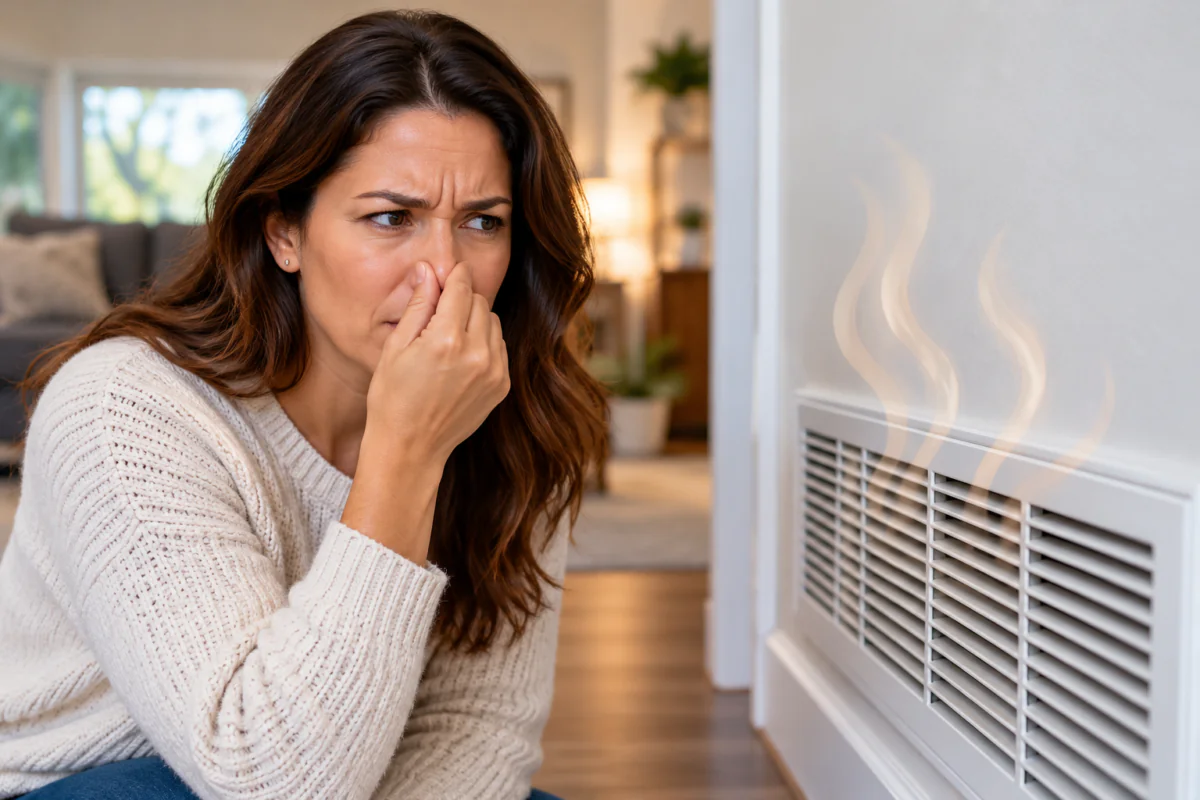
It’s that time of year. The temperature drops, you turn on the heat, and your vents produce a distinct, unpleasant odor.
Why does this happen, is it a problem, and when does a burning smell from your furnace or vents warrant a professional check?
It’s All About the Dust
That slight burnt smell in your vents is caused by dust. When your furnace stands idle through the summer, dust inevitably accumulates. The heat then causes that dust to burn off. This is perfectly normal and should clear out quickly within a few minutes, or an hour or two. Opening the windows can help, and some people plan to turn the heat on and then leave for an hour to let the smell dissipate.
As long as it’s only a burning smell and doesn’t linger, it’s likely just dust. If the smell sticks around, it can mean your filters are clogged. Make sure you change your filters as often as the manufacturer recommends, and consider changing them more often if you have pets that shed.
Any furnace can produce this smell, including electric furnaces.
When to Worry About the Smell
There are several times when the smell is a concern:
Burned Plastic or Rubber
This is a sign of an electrical short or overheating. If you smell burning plastic, turn your furnace off immediately and contact a professional. Continuing to run the furnace can cause significant damage and even start a fire. If the breaker trips, keep it turned off.
Shut off at both the thermostat and the breaker. If you have a strong plastic or electrical smell, you may want to go straight to the breaker.
Musty or Mildew Smell
A musty smell indicates the likely presence of mold in your system. Mold can cause health hazards, especially for sensitive people (such as those with asthma) and pets.
Start by replacing your air filter. If that doesn’t take care of the smell, you need to get your system cleaned, since mold can form on the furnace or in ductwork.
Sulfur or “Rotten Eggs”
This is a significant emergency. Sulfur is added to natural gas so people can smell leaks because natural gas itself is odorless.
If you smell sulfur, don’t touch anything. Leave the house immediately, taking any pets with you. Then call your utility provider’s emergency line. Don’t go back in until you get the all-clear; then call a technician for an inspection. Don’t mess around with gas leaks.
How to Reduce the Burning Smell
The normal smell of burning dust is not a problem. It doesn’t indicate that your system is damaged or that it poses a health risk. However, it can definitely be annoying.
Changing your filters regularly is the best way to reduce odors from your HVAC system. The correct interval is indicated in your user manual. Still, as previously mentioned, some people find they need to change the filters more frequently if they have pets and/or indoor allergies.
Keeping your system clean is also key to reducing or eliminating burning smells. It’s a good idea to have your furnace professionally inspected before the temperature drops anyway, and you can have the technician clean your cabinet and burner, removing as much of the dust as possible before you turn the system on.
Ensuring HVAC System Safety With Regular Inspections
Turning the system on for the first time on a relatively warm day so that you can open all of the windows and let the smell out is also worth considering. If you need to schedule an inspection and cleaning of your furnace before winter hits, contact Mid-Fla Heating & Air today.